
If you listed a unit this fall and sat through three weeks of showings with no application, you are not imagining it. The Hamilton rental market Q3 2026 rewarded landlords who priced to the block and punished the ones who priced to a number they saw last year.
Here is what I saw across our 600+ units in the Hamilton rental market Q3 2026, what the public data says, and what I would do between now and December.
What the numbers said in Q3
Start with the national picture, because it frames everything. Rentals.ca and Urbanation reported September’s average asking rent at $2,034, down 4.2% from a year earlier. That is 24 straight months of annual declines. Ontario fell faster, at 4.8%.
Hamilton did not fall off a cliff. Yardi Breeze’s Q3 report put Hamilton in-place rent growth at 2.7% year over year, and new-lease growth at +1.3%. Only two Canadian markets saw new-lease growth improve year over year. Hamilton was one of them. (Yardi’s figures come from the properties it tracks, so read them as a direction, not a citywide average.)
Two other numbers from that report matter to an owner. Hamilton annual turnover was 17.4%, among the lowest in the country. The average length of stay was 49 months. People who live here tend to stay.
Vacancy: still above where we were, not where it was feared
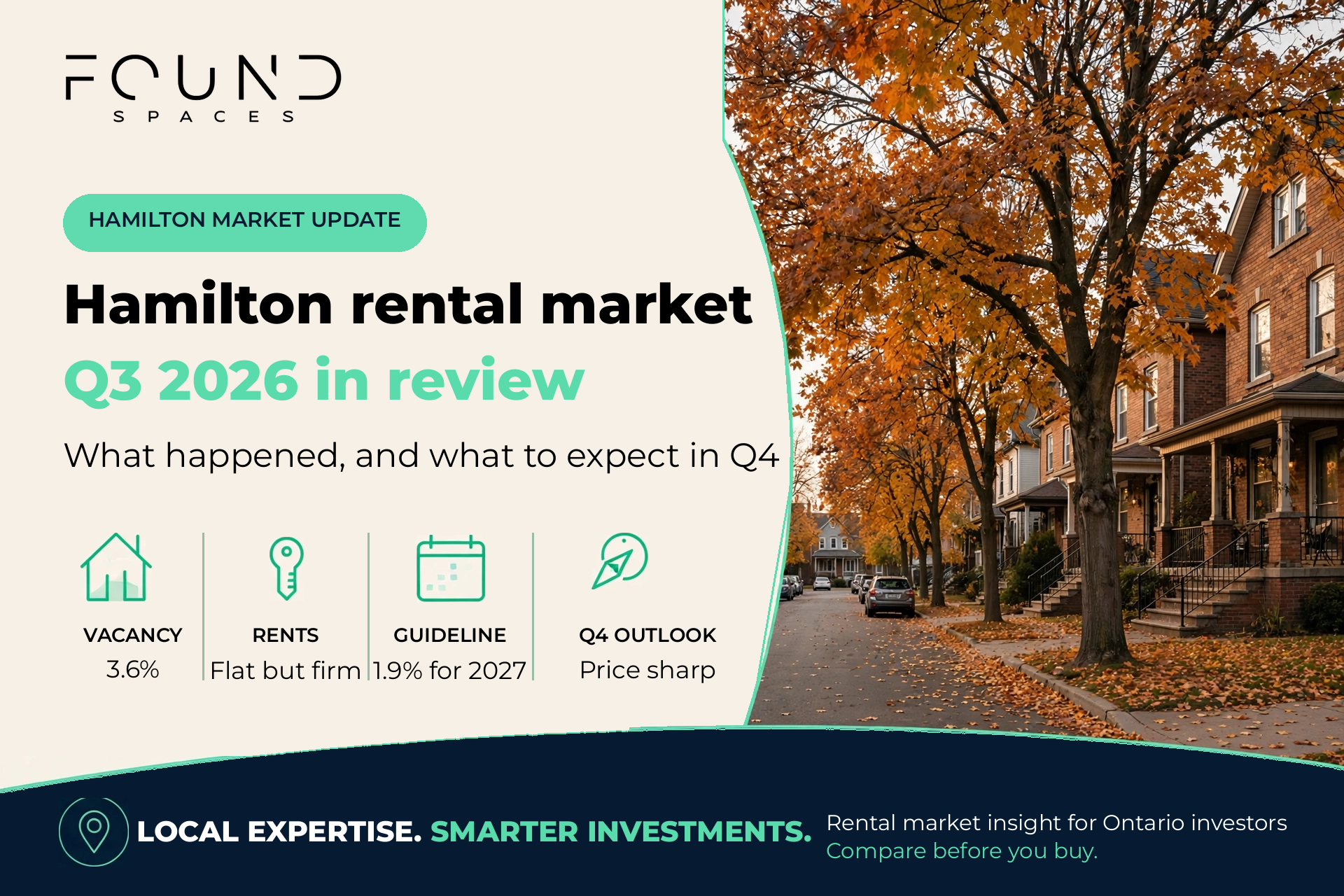
CMHC’s October 2025 Rental Market Report put Hamilton vacancy at 3.6%, the highest since the pandemic and a long way from the sub-2% years. CMHC’s outlook has Hamilton vacancy staying elevated, near 4%, through 2028.
Roughly 1,300 purpose-built rental units were under construction in the Hamilton area as of early 2026, with more completions landing through the year.
More supply does not hit every unit equally. A new-build one-bedroom competes with a renovated one-bedroom. It does not compete much with a three-bedroom upper unit on the Mountain.
Where rents landed by unit type
These are asking rents I tracked in the Hamilton rental market Q3 2026, not CMHC averages:
- One-bedroom: about $1,750 to $1,850
- Two-bedroom: about $2,000 to $2,120
- Three-bedroom: $2,650 and up
CMHC’s own two-bedroom average is lower, at $1,656 (October 2025). That gap is real. The CMHC number includes long-tenured tenants paying well under market. If you are re-leasing a vacant unit, the asking-rent range is your benchmark. If you are comparing to the tenant already in your unit, expect a bigger gap.
A scenario from the Mountain
Last quarter we took over a duplex on the Hamilton Mountain where the owner had held the upper unit at the same listing price for two months. Plenty of showings, no applications. The unit was priced about $150 above the comparable two-bedrooms within a few blocks.
We dropped the ask, tightened the listing photos, and had a signed lease inside two weeks. The owner lost most of a month of rent first. One empty month on a $2,000 unit costs $2,000. Holding out for an extra $75 a month takes more than two years to earn that back.
The lesson is simple. In a flat market, a vacant month costs more than a modest price cut. Price to the comparable listings on your own street, not to last year.
Hamilton rental market Q3 2026: what to expect in Q4
The 2027 guideline is 1.9%. Ontario’s rent increase guideline for 2027 is 1.9%, down from 2.1% in 2026, per the province’s residential rent increases page. On a $1,900 unit that is about $36 a month. You need at least 12 months since the last increase, and written notice in the proper form at least 90 days before the increase takes effect. Our Ontario rent increase guideline explainer walks through the notice step by step.
Renewals will be quiet. Yardi’s national average renewal increase fell to 2.4%, the lowest since Q4 2022. Most Hamilton renewals will land at or just under the guideline. That is fine. A tenant who stays 49 months is worth more than a $20 monthly bump.
Winter listings need sharper pricing. Fewer people move in December and January. If a unit turns over in Q4, price it to rent in the first two weeks, not the first two months.
Watch new supply near your building. If a purpose-built building opens within a kilometre, expect a few weeks of concessions on your street. Our Hamilton rental market report tracks where new buildings are opening, and our neighbourhood income comparison shows how Mountain, downtown and Stoney Creek rents differ.
What I would do before year-end
- Pull three live comparables within a few blocks of each unit. Compare listing price, not CMHC averages.
- Serve rent increase notices on time for any tenancy where the 12-month mark falls in Q1. Late notices are the most common error we fix. If a notice gets challenged, our legal services team handles the LTB side.
- Inspect every unit that could turn over this winter. A deferred repair found in January costs more than one found in November.
- Decide now whether you would rather take a $50 lower rent from a stable tenant or hold out. Most owners I work with take the stable tenant.
Why owners ask us to run the numbers
We manage 600+ rental units across Hamilton, from Ward 3 fourplexes to Mountain townhomes to Stoney Creek single-family rentals. Every listing we price comes from live comparables, not a rule of thumb. When the market flattens, pricing mistakes show up fast, and we see them across dozens of units at once. That is the data behind the advice in this Hamilton rental market Q3 2026 review.
If you want a second set of eyes
If you have a unit coming up for renewal or turnover this winter, send us the address and current rent. We will tell you where we would price it and why, whether or not you ever hire us. You can reach me at the details below.

Kate Mackay is the founder and CEO of Found Spaces Property Management, managing over 600 rental units across Hamilton, Stoney Creek, Ancaster, Dundas, and the greater Hamilton area. She built Found Spaces from the ground up starting in 2017 and specializes in full-service property management for residential landlords and real estate investors.