
Rental Property Inspections:
What Hamilton Landlords Need to Know
Rental property inspections are one of the most overlooked parts of owning a rental in Hamilton. Most landlords either skip them entirely or walk through the unit once a year without a checklist. Both approaches cost money.
A missed leak under the kitchen sink turns into subfloor damage. A tenant running a space heater off an overloaded power bar becomes a fire risk. A slow drain ignored for six months becomes a burst pipe in January. These aren’t hypotheticals. We see them in the properties we take over from self-managing landlords on a regular basis.
If you’re managing your own rental or working with a property manager who doesn’t have a structured inspection process, here’s what you should know.
What Ontario law says about rental property inspections
Ontario’s Residential Tenancies Act doesn’t use the word “inspection,” but it governs your right to enter a rental unit. You can enter with 24 hours’ written notice, between 8 a.m. and 8 p.m., for specific reasons listed in the Act. Checking the condition of the unit qualifies.
You can’t just show up. You can’t let yourself in without notice. And you can’t use inspections as a pretext to pressure a tenant you’re having issues with. The Landlord and Tenant Board takes entry violations seriously. Tenants who feel harassed can file a T2 application against you, and you’ll end up in a hearing defending your conduct instead of protecting your property.
At Found Spaces, we handle all inspection scheduling and notice delivery. Every inspection follows RTA requirements. The tenant gets proper written notice, and we document the visit from start to finish.
Why most landlords don’t inspect often enough
The most common reason is time. You’re working full-time, you own one or two units, and driving out to do a walkthrough feels like something you’ll get to next month. Then next month becomes next quarter, and next quarter becomes next year.
The second reason is discomfort. Walking through a tenant’s home feels awkward for a lot of landlords. You don’t want to seem intrusive. So you skip it, or you do a quick lap through the unit and leave without actually checking anything.
Both problems have the same fix. A structured inspection on a set schedule, with a checklist, removes the guesswork. The tenant knows it’s coming. You know what you’re looking at. Nobody is caught off guard, and the process takes 30 to 45 minutes instead of an awkward five-minute walk.
What we check during rental property inspections
We run scheduled property evaluations on every unit we manage. Here’s what we look at.
Plumbing. We check under every sink, around toilets, and at the water heater. Slow leaks are the number one source of preventable property damage in Hamilton’s older housing stock. A drip that goes unnoticed for three months can rot out a vanity cabinet and the subfloor beneath it.
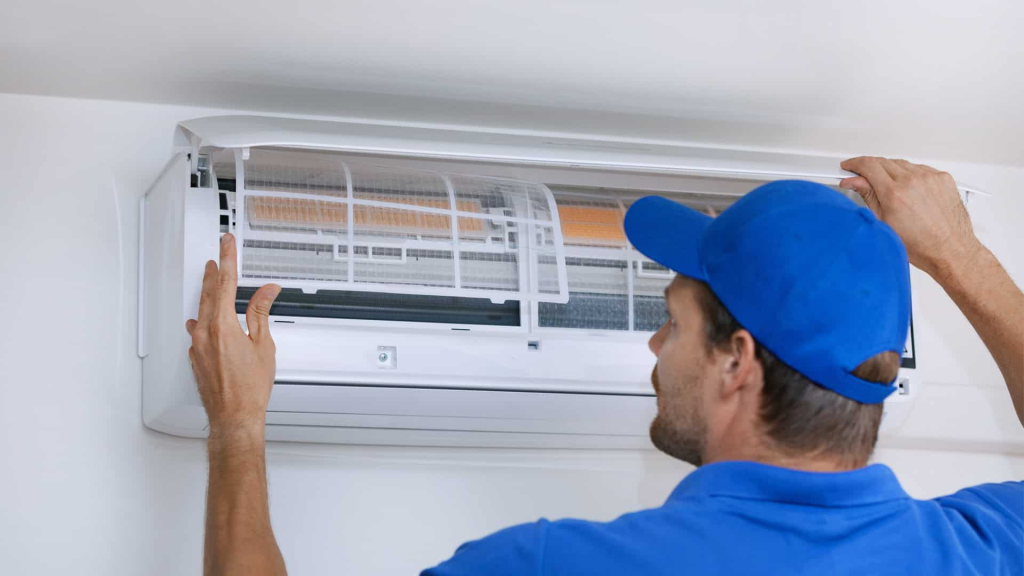
HVAC. Filters, thermostat function, and any unusual sounds from the furnace. A furnace that’s struggling in October will fail in February. We also verify that tenants aren’t blocking vents or registers with furniture, which reduces efficiency and creates uneven heating.
Electrical. We look for overloaded outlets, damaged cords, missing cover plates, and any tenant modifications that create fire risk. In older Hamilton homes with 60-amp panels, tenants adding window AC units or space heaters can push circuits past their limits.
Walls, ceilings, and floors. Water stains, cracks, soft spots, and signs of mould. In Hamilton’s pre-war housing, moisture issues are common. Catching them early is the difference between a $300 repair and a $5,000 remediation.
Smoke and CO detectors. Ontario law requires working detectors on every level. We test them during every inspection. If a battery is dead or a unit is missing, we replace it on the spot.
Exterior and common areas. Foundation cracks, grading issues, eavestroughs, and window seals. For multi-unit buildings, we inspect hallways, laundry rooms, and shared entrances.
Lease compliance. We verify the unit matches the lease terms. No unauthorized occupants, no prohibited pets, no alterations that weren’t approved. These issues are far easier to address when caught during a routine inspection than after they’ve been going on for months.
How often to schedule rental property inspections
We inspect every property we manage on a set schedule. At minimum, that means three types of inspections built into every management contract.
Move-in inspection. When a new tenant takes possession, we photograph and document the unit’s condition so there’s a clear baseline. Every wall, every appliance, every floor surface. This documentation protects you if there’s a dispute at move-out about what damage existed before the tenancy.
Scheduled evaluations during the tenancy. These are the ones that catch problems before they escalate. A slow drain caught during an inspection is a $200 fix. The same drain left alone for six months becomes a burst pipe and a $5,000 insurance claim. We schedule these proactively so nothing slips through the cracks.
Pre-move-out inspection. This one gets skipped by most landlords and smaller property managers. It’s a mistake. The pre-move-out inspection happens before the tenant’s final day. It gives them a chance to fix issues, clean properly, and avoid disputes over their last month’s rent. It also gives you a head start on turnover planning so the unit is ready for the next tenant faster. Learn more about how we handle leasing and tenant placement.
What happens when rental property inspections get skipped
We take over properties from self-managing landlords regularly. The pattern is almost always the same. The landlord stopped inspecting, a problem grew quietly for months, and the repair bill ended up five to ten times what it would have cost if caught early.
Common examples from our portfolio: a toilet with a failed wax seal that leaked into the subfloor for eight months. A dryer vent that hadn’t been cleaned in three years and was a fire hazard. A tenant who had moved in two additional occupants and was subletting a bedroom in violation of the lease. None of these are hard to catch. All of them are expensive to fix after the fact.
The financial math is straightforward. A single missed water leak can cost more than a full year of property management Hamilton fees. Regular inspections aren’t an expense. They’re insurance against the kind of damage that wipes out a year of rental income.
How we track and report inspection results
Every inspection we complete goes through our owner portal. You can see the inspection date, findings, photographs, and any maintenance work orders that came out of it. Monthly statements include inspection summaries when applicable. You always know what’s happening with your property without having to ask.
When an inspection turns up a repair, we don’t just send you a surprise invoice. Every work order goes through the portal so you can see the request, the status, and the final cost in real time. We also use proprietary time tracking technology through our sister company Propolio to set custom spending limits on approved maintenance. That means you never go over your approved budget during a billing period.
This level of tracking is something most property managers, especially smaller operations, don’t have the systems to offer. It’s one of the reasons landlords across our portfolio stay with us long-term.
What to do next
If you’re doing your own rental property inspections and want a second opinion on your process, or if you want to hand them off entirely, we’re happy to talk. We manage over 600 rentals across Hamilton, Burlington, and Kitchener, with $160M+ in assets under management. Inspections are built into every management contract at no extra charge.
Book a free consultation and we’ll walk you through how it works for your property.

Kate Mackay is the founder and CEO of Found Spaces Property Management, managing over 600 rental units across Hamilton, Stoney Creek, Ancaster, Dundas, and the greater Hamilton area. She built Found Spaces from the ground up starting in 2017 and specializes in full-service property management for residential landlords and real estate investors.
Kate Mackay is the founder and CEO of Found Spaces Property Management, managing over 600 rental units across Hamilton, Stoney Creek, Ancaster, Dundas, and the greater Hamilton area. She built Found Spaces from the ground up starting in 2017 and specializes in full-service property management for residential landlords and real estate investors.