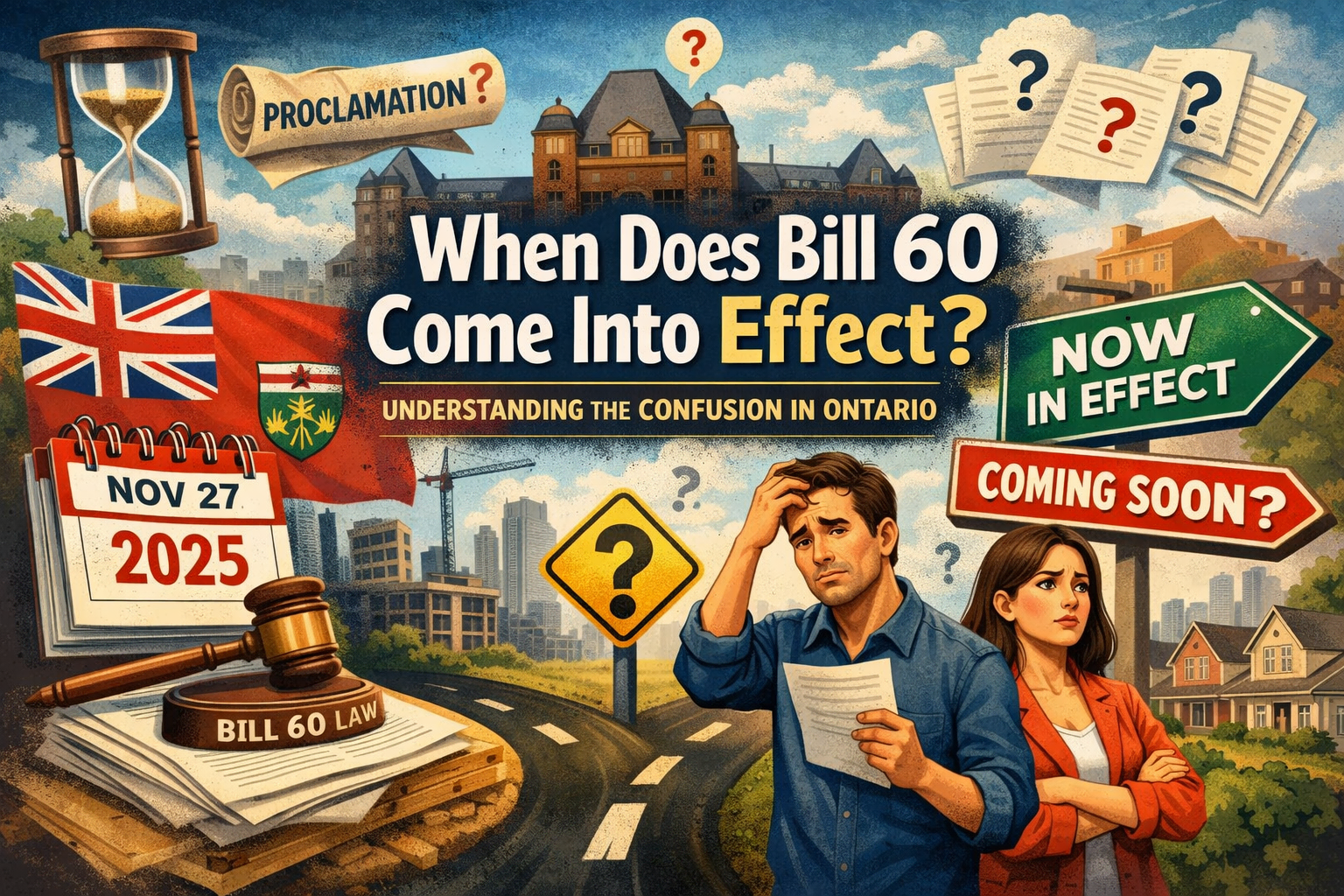
If you are a landlord, tenant, or real estate professional in Ontario, you are not alone in asking a simple but important question: when does Bill 60 come into effect? The answer matters because acting too early or too late can lead to costly mistakes, missed deadlines, or unnecessary disputes. Bill 60, formally known as the Fighting Delays, Building Faster Act, 2025, received Royal Assent on November 27, 2025, which means it is now law. However, that does not mean every rule within the legislation applies right away.
This is where much of the confusion begins. Some sections of Bill 60 became enforceable the moment Royal Assent was granted, while others will only take effect once the Ontario government issues future proclamations. Until those dates are announced, many existing rules remain in place. For anyone navigating rental agreements, housing disputes, or compliance decisions, understanding which parts of Bill 60 are active today is critical. Staying informed is not just helpful. It protects your rights and helps you make confident, informed decisions as the law continues to roll out.
When Does Bill 60 Come Into Effect and Why Is There So Much Confusion?

If you feel unsure about when Bill 60 actually comes into effect, you are not missing something. Many landlords and tenants across Ontario are asking the same question because the rollout has not been straightforward. Bill 60 became law when it received Royal Assent on November 27, 2025, but that date does not tell the full story.
The confusion comes from how Ontario legislation works in practice. Some sections of Bill 60 are active right now, while others require future government proclamations before they apply. Public messaging has not always explained this clearly. Headlines often say the law is “in effect,” without explaining which rules have changed and which ones have not. As a result, people are left guessing whether they should act, wait, or seek advice. When housing decisions can affect your finances or your home, that uncertainty feels stressful and risky.
Overview of Bill 60: The Fighting Delays, Building Faster Act
Bill 60, officially titled the Fighting Delays, Building Faster Act, 2025, is part of Ontario’s broader response to ongoing housing supply challenges. The legislation is designed to reduce delays in development approvals and improve how housing related processes are handled across the province.
At its core, Bill 60 focuses on changes to planning rules, development approvals, and tribunal processes that affect housing and construction. The goal is to remove bottlenecks that slow down projects and make it harder to deliver new housing. For landlords, tenants, and real estate professionals, these changes matter because they influence how disputes are handled, how timelines move forward, and how rules are applied.
Bill 60 is not a single change with one clear start date. It is a collection of amendments that come into force at different times, which is why understanding its timeline is so important.
Understanding ‘Coming Into Effect’ in Ontario
In Ontario, a law coming into effect does not always happen all at once. When a bill receives Royal Assent, it officially becomes law, but that does not mean every section is immediately enforceable. Some provisions are written to take effect on the day of Royal Assent, while others require a formal proclamation from the government.
Until a section is proclaimed, the existing rules remain in place. This distinction is critical for landlords and tenants who need to know which obligations apply today and which ones are still coming. Many people assume Royal Assent equals full implementation, but with Bill 60, that assumption can lead to confusion and mistakes. Staying informed about proclamations is essential for staying compliant.
Key Dates in the Bill 60 Timeline
Understanding the Bill 60 timeline helps bring clarity to what is active now and what is still pending.
- November 24, 2025
Bill 60 passed third reading in the Ontario Legislature. - November 27, 2025
Bill 60 received Royal Assent and officially became law. - Dates to be announced
Several sections of Bill 60 still require future proclamations before they come into effect.
Because proclamation dates have not yet been fully announced, many people are still operating under existing rules while preparing for upcoming changes.
Current Sections of Bill 60 That Are Active
Some parts of Bill 60 took effect immediately on November 27, 2025, when Royal Assent was granted. These sections are legally in force and form part of Ontario law today. In general, they relate to procedural and administrative changes connected to housing and development.
That said, being legally active does not always mean the impact is obvious right away. Some changes rely on updated processes, guidance, or enforcement practices before people feel them day to day. Landlords and developers should be aware that shifts may already be happening quietly behind the scenes.
Parts of Bill 60 That Are Not Yet Active

Many sections of Bill 60 are not yet active, which can lead to confusion. Important changes, such as updates to landlord-tenant board procedures and amendments to the Residential Tenancies Act, are still pending. These changes need future proclamations from the government before they can be enforced.
Until those proclamations are made, the existing rules remain in force. Stakeholders, including landlords and tenants, should prepare for these future changes, as some provisions may significantly impact their rights and responsibilities once they come into effect. Clear communication from the government about these updates is essential, and professionals in the field should closely monitor these sections to stay informed.
Reasons for Ongoing Confusion About Bill 60
Bill 60 is being implemented in phases, and that alone creates uncertainty. Add delayed proclamations, mixed media messaging, and limited government updates, and it becomes difficult for people to know what applies at any given moment.
Many readers are also trying to understand the difference between a law being passed and a law being active. When legal opinions vary and updates are hard to track, confusion grows. This is why the question of when Bill 60 comes into effect continues to trend. People want clarity before making decisions that affect their housing or income.
- Phased implementation creates uncertainty among stakeholders.
- Delayed proclamations mean not all sections are currently applicable.
- Media headlines often oversimplify the situation.
- Confusion exists regarding the difference between ‘law’ and ‘active law’.
- Stakeholders may rely on outdated information.
- The complexity of the bill can lead to misinterpretation.
- Government communication has not been as clear as needed.
- Lack of resources to track changes can hinder understanding.
- Changes in regulations can have varying impacts on different groups.
- Legal professionals may have differing opinions on interpretations.
What Landlords and Tenants Should Do Right Now
The safest approach is to rely only on confirmed information. Do not assume all Bill 60 changes apply today. Monitor official Ontario announcements for proclamation updates and seek professional guidance if you are unsure how the law affects your situation.
Keeping clear records, staying informed, and preparing for upcoming changes will put you in a stronger position. Bill 60 is evolving, and understanding what is active now versus what is coming later helps you protect your rights and make confident decisions.
Clarity Matters When the Law Is Still Changing
Bill 60 is now law, but knowing that alone is not enough. What matters most is understanding which rules apply today and which ones are still coming. For landlords and tenants, acting on the wrong assumption can lead to disputes, delays, or decisions that are hard to undo. That uncertainty is exactly where many people feel stuck right now.
This is where Found Spaces fits in. Our role is to help you cut through the confusion and make sense of what is real, what is active, and what still requires caution. Whether you are reviewing a rental, preparing documentation, or trying to stay compliant as laws evolve, having clear, documented insight gives you confidence to move forward.
Bill 60 will continue to roll out in phases. You do not have to navigate that alone. If you want help understanding your position, documenting your rental properly, or avoiding costly mistakes as regulations change, Found Spaces is here to support you every step of the way.
Frequently Asked Questions
What is Bill 60 about in Ontario?
Bill 60 is a law that focuses on changes to various working and living conditions in Ontario.
When will Bill 60 start being enforced?
Bill 60 is set to go into effect on a specific date, but the exact date can be announced by the government.
Who will be affected by Bill 60?
Bill 60 will affect many individuals and businesses in Ontario, especially those involved in certain industries.
Are there any changes people should be aware of before Bill 60 takes effect?
Yes, people should pay attention to potential changes in regulations, as they may need to adjust their practices.
How can I stay updated on Bill 60 developments?
You can stay updated by following government announcements and reliable news sources for the latest information.
TL;DR Bill 60, known as the Fighting Delays, Building Faster Act, officially became law on November 27, 2025. However, not all sections are in effect yet, as some still await government proclamations. This has led to confusion among landlords and tenants about what changes are applicable now. Currently active sections began on Royal Assent, but many crucial amendments are pending. It is essential for stakeholders to stay informed and seek professional advice before making any assumptions about the bill’s impact.